THE BUSINESS AI PLAYBOOK
AI proposal creation that protects scope, pricing and delivery promises
Turn discovery notes into stronger proposals with approved scope, verified pricing, explicit assumptions and a review process your delivery team can trust.
 Discuss with Oliver and his team
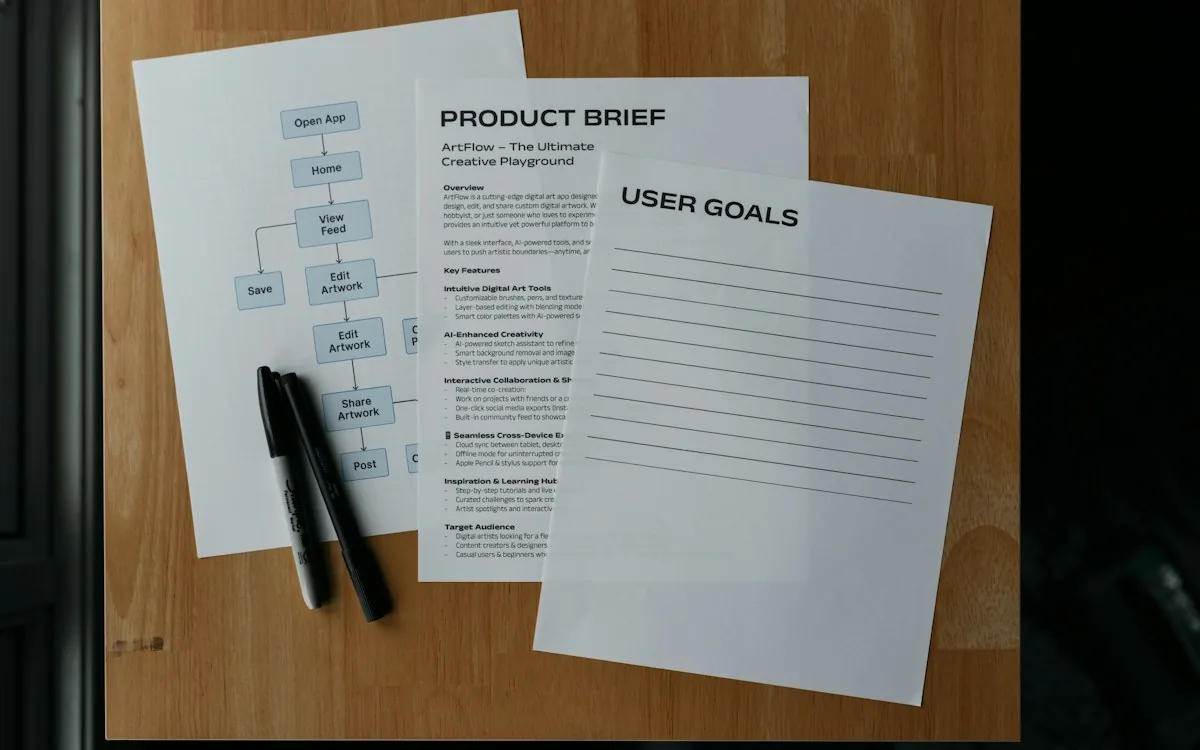
AI can turn discovery evidence into a proposal draft, but the commercial controls should live outside the writing step. Build proposals from approved service components, current price inputs and explicit delivery assumptions. Require review of scope, exclusions, totals and commitments before sending. Track how much editing the draft needs and whether delivery teams can fulfill what was sold. Faster proposal writing matters only when it improves the quality of the agreement.
What to take away
- Treat the scope and price model as structured inputs rather than text to improvise.
- Separate customer requests from promises the business has approved.
- Use delivery feedback to improve the proposal library after projects begin.
Create a proposal brief your team can verify
Begin with the customer’s problem, desired outcome, current process, stakeholders and constraints. Attach discovery notes or transcript references to material statements. Mark assumptions clearly: an unconfirmed integration, estimated transaction volume or proposed start date must not appear as an agreed fact.
Define a minimum brief for each offer. A website project might require page types, content responsibilities and approval contacts; a workflow project might require record systems, actions, exceptions and access requirements. If a required input is missing, the assistant should generate a question or an explicitly conditional option instead of quietly filling the gap.
Separate commercial calculation from persuasive writing
Maintain approved service modules with inclusions, exclusions, dependencies and pricing rules. Calculate totals with ordinary software or a verified spreadsheet. Let AI explain the selected option in the customer’s language after those values are set. Discounts, payment terms and nonstandard commitments should require their own approvals.
A useful drafting instruction is: Use only the approved modules and verified quantities. Describe the customer’s stated goal, label assumptions, list exclusions, and produce an unresolved-questions section. Do not add guarantees, delivery dates, integrations or discounts. This gives the writer enough freedom to be clear without handing it commercial authority.
Illustrative proposal: automate a shared sales inbox
Imagine a firm wants automatic replies and CRM updates. Discovery confirms one inbox and one CRM, but does not establish whether attachment extraction is needed. The draft includes inquiry classification, approved reply drafting and CRM handoff. It lists attachment processing as an unresolved scope question, not an invisible promise.
The delivery lead checks permissions and error handling; the sales owner verifies price and buying context. If the customer later requests another inbox, the system produces a scope delta referencing the original proposal. This is more useful than regenerating a polished document that conceals what changed and why the price moved.
Measure proposal quality after the sale
Review drafts for factual corrections, missing dependencies and misleading language. Keep approved clauses versioned so an old price or retired service does not resurface. Record who approved each proposal and the evidence available at that time.
After delivery begins, compare the signed scope with actual onboarding questions and change requests. Some revisions reveal a weak discovery process rather than poor writing. Feed those patterns into the brief and module library. Avoid using proposal speed alone as the success measure; a fast document that creates unpaid work can weaken margins and customer trust.
FROM READING TO ACTION
Your first steps
- Select one repeatable offer and identify its required discovery inputs.
- Create approved scope modules with exclusions and dependency notes.
- Connect a verified pricing calculation rather than asking AI to invent totals.
- Assign separate reviewers for commercial terms and delivery feasibility.
- Review signed proposals against the first month of actual project work.
What to measure
| Measure | How to track it |
|---|---|
| Draft-to-approved time | Elapsed working time from a complete brief to an internally approved proposal. |
| Material correction rate | Drafts requiring changes to scope, price or commitments divided by drafts reviewed. |
| Scope clarification load | Unplanned clarification hours during onboarding per signed project, compared with baseline. |
Common questions
Can AI send proposals automatically?
Start with reviewed drafts. Automatic delivery may suit a tightly bounded standard quote, but nonstandard scope, discounts and commitments should go through accountable commercial approval.
How should old proposals be used?
Use them to identify language and structure, then remove stale pricing and client-specific details. An old proposal is an example, not an authoritative source for today’s scope or terms.
Sources & further reading
These sources provide background. The workflow designs are Palnau Systems implementation guidance; examples are illustrative, not reported client results. Product capabilities and requirements can change.
Prepared with AI assistance for business owners and managers. For a recommendation based on your actual systems and requirements, work directly with Oliver and his team.